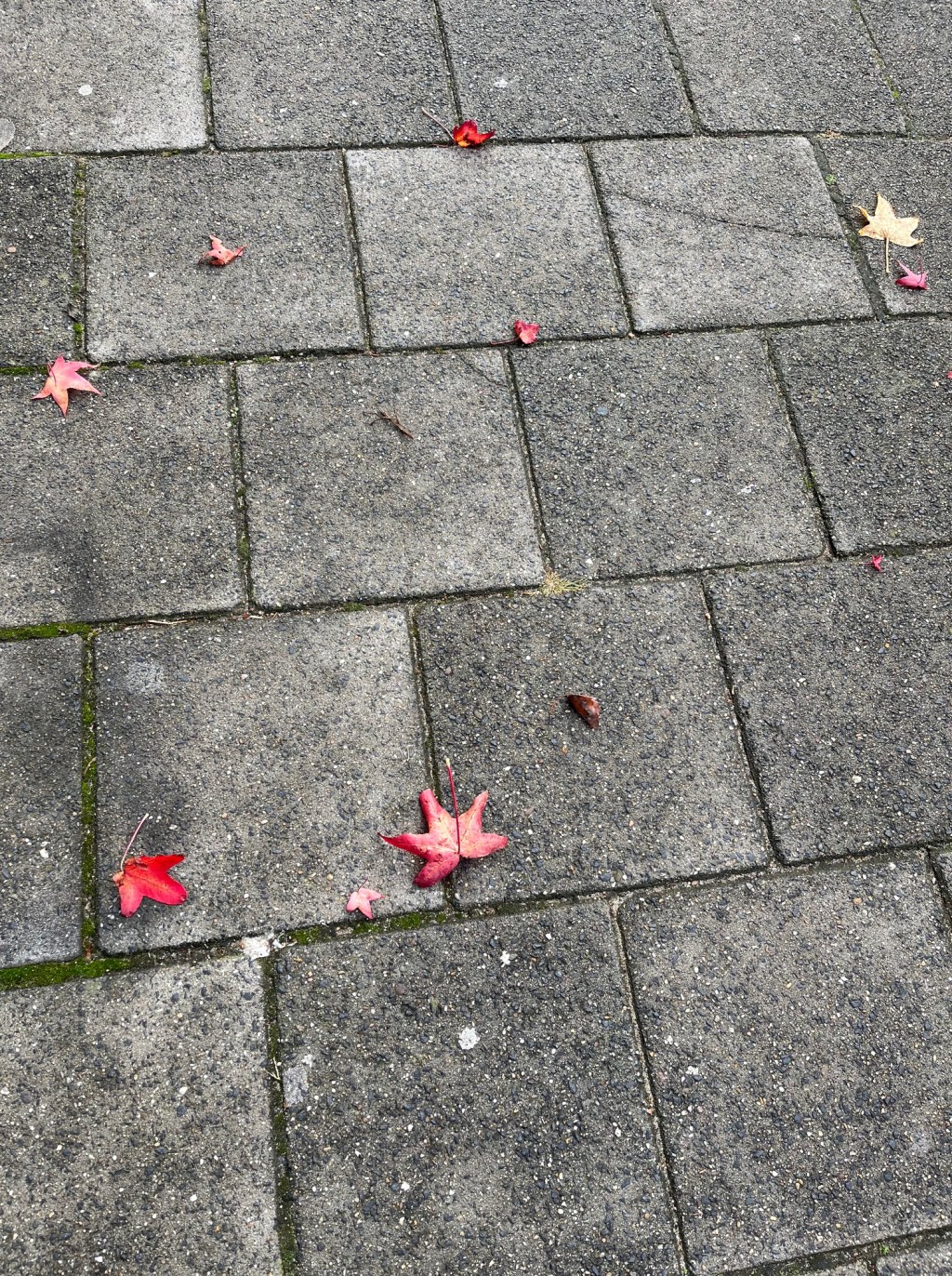
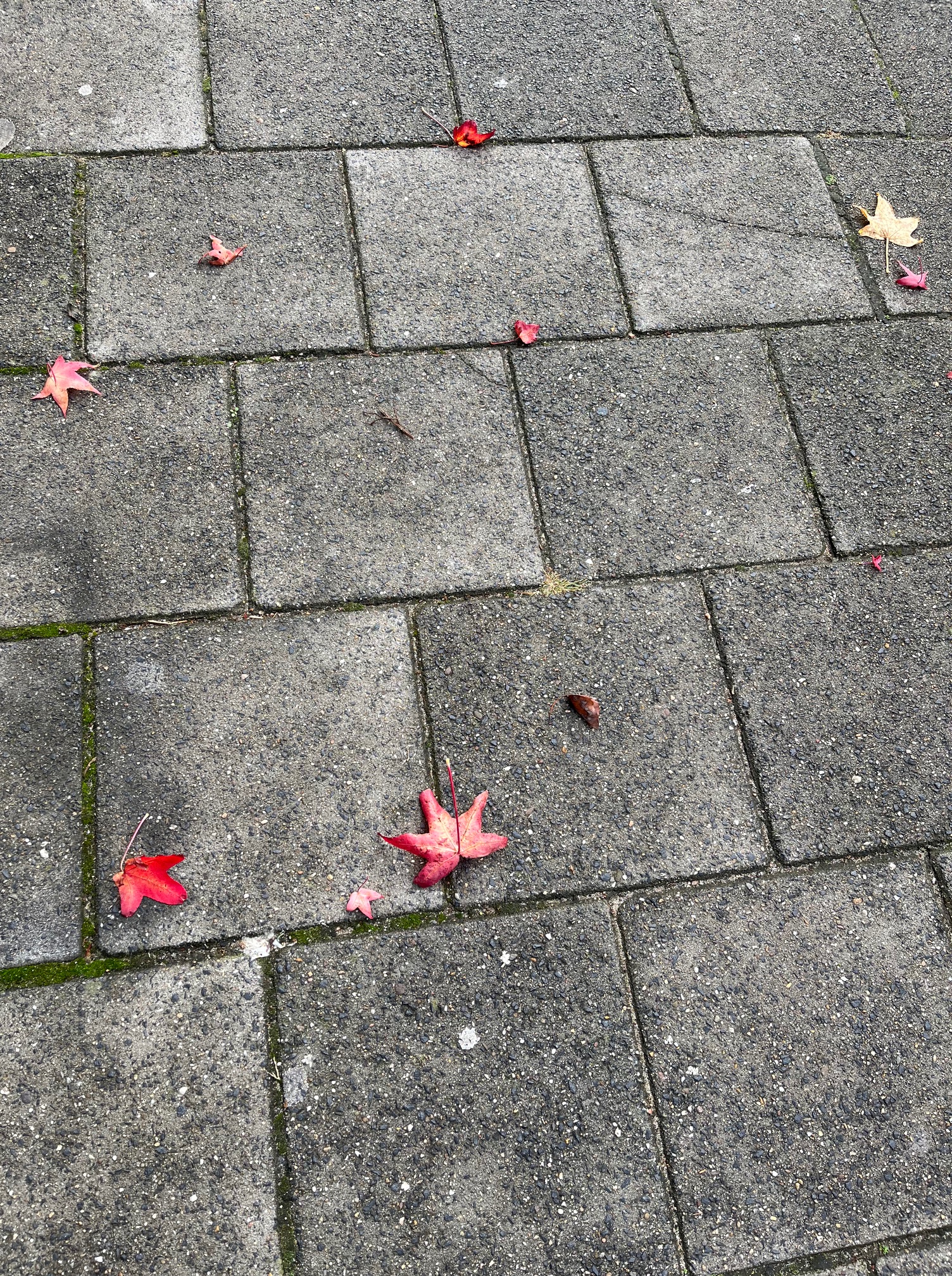
Grief is like weather, and like seasons: it is not one thing, but a relation of things. Weather is not just the chill of the air, or the density of cloud and rain, but also the colours their light reveals or conceals, the qualities of our clothes revealed by the damp or cold, how our very perception of distance and duration changes. Even though we might notice it as something as simple as a slight shift in temperature and light, the change of a season feels profound: everything is changing. As I noted in my post on joy (which in turn drew on poet Wallace Stevens’s invocation of weather), grief is a resonance of love and in turn sets everything love touched – and what does love not touch? – into new vibration. It’s like this that weather, seasons, and grief are like poetry: the resonances between word-sound and word-meaning in poetry bring any one thing into relation with everything.
Being plunged into grief was to enter the time of poetry. Everything was seasoned and weathered by the loss of her who shared my everything. I even found, if not solace, then at least shelter, in the poetry of the word lousy to describe all the cheap shots of Kathy’s sudden loss. Soon it became a time of poetry in a different sense, as I found myself combing my poetry shelves for things to send to a friend whose life was interrupted with long covid at the same time mine was interrupted by sudden death. To a musicologist who suddenly could not bear to hear music, I hoped poems would be small and quiet enough to get through the sensory logjam that long covid was imposing. The poems resounded differently with our different griefs, but brought them into resonance. Finding them helped me also to find my own words for what this time – that time – was.
When we notice seasons change, it is a moment of poetry. Time thickens and it’s all tenses at once in relation: the change has happened, is happening, and will happen. What strikes us is the inevitability. Rilke’s famous “Herbsttag” (1902) , which marks the arrival of autumn, shifts into this prophetic sense in its final turn:
Wer jetzt kein Haus hat, baut sich keines mehr.
Wer jetzt allein ist, wird es lange bleiben,
wird wachen, lesen, lange Briefe schreiben
und wird in den Alleen hin und her
unruhig wandern, wenn die Blätter treiben.*
So it is that I notice, now that autumn is irrevocably upon us, now that I am two years and two months on from the event, that the time of poetry has passed, is passing and will pass. It’s as hard to write as it is to deny. The statement – and the sensation – are quite… prosaic. I’m not sure there’s much more I could add to it.
The weather still comes, to be sure, but the season has changed.
.
.
.
.
*Translations – which demonstrate the great possibilities and limitations of translation – are here. In the spring of 2022, a few months before Kathy died, my choir sang Morten Lauridsen’s setting of Rilke’s French poem “Dirait On” For reasons I couldn’t explain, it made me think of my daughter and that particular moment where she was learning to be social, but also content with herself. I emailed Kathy about it and I noted in my journal:
Sometimes, almost off-hand, Rilke

passes you a small bit of your life

giftwrapped with no fuss, but care,

in a shimmering scarf.

What’s the occasion? You needn’t have asked.

Your tears know: its passing.


 Alec Badenoch
Leave a comment